Marco DeStefano ’27
The following post was adapted from a conversation between Marco DeStefano ’27 and Mateo Lujan ‘29, an intern with the Global Engagement Office (GEO).1
Marco is a double-major in Sociology/Anthropology and History who spent Fall of his junior year abroad with Temple Rome. In this conversation, Marco shares his thoughts on classes in Italy, cooking in Rome, and new connections with aspects of his identity through this experience.

Did you always know you wanted to study abroad?
Going into college I definitely knew that I wanted to study abroad at some point. I was motivated by my parents who were both the first in their family to get a college education. My mom used to tell me how her biggest regret from college was not studying abroad, which was out of reach for her due to financial circumstances. I wanted to expand my horizons. Keeping my parents’ advice and wisdom in the back of my mind definitely motivated me to seriously consider taking advantage of this opportunity.
How did you choose Temple Rome?
Initially, I considered studying abroad in London, although looking back, I’m not actually sure why. Fortunately, I had a friend studying in London who knows me well enough to share that the city might not match the vibe I was looking for. I pivoted to Italy as my new destination.

I already had a cultural connection to the country thanks to my dad, who was born in Italy. When I was a child, he would often speak to me in Italian, and I would respond in English. As an adult, studying in Italy seemed like a vital way to reexplore this culture through immersion. Many members of my family on his side live in Italy to this day, so I was also excited to have an opportunity to connect with them.
Once I’d decided on Italy, there were many things I took into consideration when choosing a program. I knew that I wasn’t looking for a program that was language-intensive or specifically geared towards art history. (I actually ended up learning a great deal about art history through an independent project; but at the time, I didn’t realise this was an interest I would explore!)
I knew I wanted a program that offered a wide selection of coursework in English for students with varied interests, which Temple Rome provided. As an added bonus, the program was based in an ideal location, just a 4-hour bus ride away from some of my family members.
What classes did you take abroad?
All students on my program are required to take an Italian language learning class. I knew some Italian going in, but because I didn’t have a formal background, I took the beginner-level, which was very helpful for day-to-day life.
Before leaving for Italy, I was interested in the Urban Studies track as part of my Sociology & Anthropology major, so it was a specific goal of mine to take a few Urban Studies related classes. While abroad, I was able to take an Urban Dynamics class as well as a Sustainable Environments class. These were two classes that were especially interesting to take in Rome!
To pursue my interests in history, I took a very engaging cross-disciplinary history class focused on the Mafia in modern Italy. And lastly, I undertook an independent study that, over time, morphed into an art history project focused on a medieval church in Rome. This was an amazing and truly unique experience.

Is there anything that surprised you about your classes?
My program was relatively small. I believe there were 200 students in total. The average class size at Temple Rome was around 16 students. What surprised me was that despite the class size, the class format was lecture-based rather than seminar or discussion-based. This was definitely a departure from the norm at Swarthmore. While I didn’t enjoy this format as much, I appreciate that this is part of studying abroad in a foreign country, where teaching styles and curricula remain very different from those in the US. I viewed this as a learning experience and managed to get a lot out of my classes.
If you were to describe Rome to someone who knew nothing about it, what would you say?
Wow, where to start! When you first step foot onto the pavement and the cobblestone streets, the deep history of the city immediately hits you. Many of the apartments where Romans live were remodeled or rebuilt in the 1800s. But near the historic center, you’ll see many beautiful churches from the medieval era. So much art surrounds you as you walk, especially religious and catholic art, you get the sense you’re walking through an open-air museum.
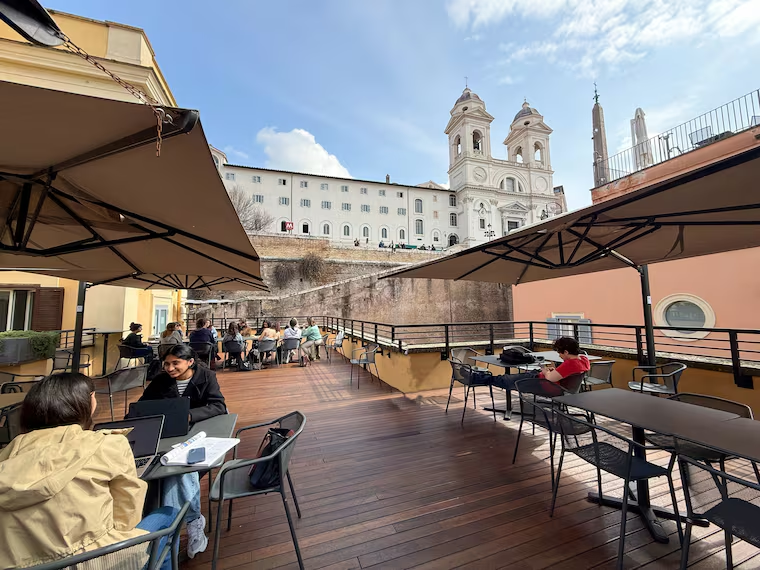
I was lucky to attend a university which was located right next to the Spanish steps, one of the most well known landmarks in the city of Rome. Temple Rome’s campus sits at Piazza di Spagna, one of the most notable landmarks in the Eternal City and a UNESCO World Heritage Site — it’s hard to imagine a more fitting place to study art, history, and culture.

From the time we arrived, program participants were made aware of the privilege we held to be able to live and attend university in this exclusive area. Properties in central Rome have always been historically expensive. The local permanent residents typically live in apartments that have been passed down over many generations. It’s important to approach the place and community with a sense of humility and responsibility. For students from the US, the cost of living in Rome is manageable – especially in comparison to many popular cities in western and northern Europe. The process of tracking my own expenses, while thoughtfully acknowledging the many residents who are burdened by higher prices, gave me insight that will undoubtedly serve me well in the future.
You mentioned the cost of living, what were meals in Rome like?
The hardest adjustment that I had to make abroad was having to cook all my meals. Being at Swarthmore, I was accustomed to having a dining hall and cafes easily accessible. But like most programs abroad, Temple Rome didn’t have a meal plan and I had to make food at home. I had to learn to plan grocery runs, meal prep, and cooking times around my busy school schedule and around weekends when I often left the city to explore Italy.
Without a meal plan, I grew very close to my 7 apartment mates. We would take turns getting groceries and cooking for each other, and really bonded over meals. I can still remember sitting in the living room and smelling the aroma of pasta drifting from the kitchen. I miss this aspect of the experience, there were some real memories made in that space. Fortunately, my roommates and I got along very well from the start, and often travelled together in the city as a group.

You shared earlier that your dad is Italian, how did your identity impact your experience abroad?
Yes, my dad is Italian; but my mom is actually Filipino. When I started walking around Rome, I was surprised to see a lot of Filipinos, especially in areas such as near the Vatican. My apartment was located near three delicious Filipino restaurants, which I frequented when I got a little bored with the delicious pasta and meat dishes the country has to offer.
The Temple Rome program arranged opportunities to meet Italian students by pairing us together to learn Italian customs and traditions. It must have been a twist of fate, because the group I was paired up with was almost entirely Filipino! Their perspectives on Italian culture were fascinating and insightful. They gave great information on behaviors and ways of thinking that Italians expected of visitors to the country. Our shared background helped bridge the gap between us and contributed to a more enriching exploration of American and Italian cultures.

What are you taking away from this experience?
Through this experience, I gained a deeper understanding of how I want to spend my time and what I value most outside of academics. At Swarthmore, so much of our days are structured for us: classes, extracurriculars, deadlines. There is little room to just sit with yourself and figure out what you genuinely want. Being abroad changed that. The academic structure was different, and I found myself with stretches of unscheduled time that forced me to make real choices about how I lived.
When I returned, I brought that clarity back with me. I became more deliberate about where I put my energy, and started showing up only for the things that brought me genuine fulfillment. That kind of self-knowledge is not something anyone can hand you. It has to be lived, and I am deeply grateful that this program gave me the space to learn it.

- The views and/or opinions represented in the GEO blog belong solely to the student(s) and do not represent Swarthmore College; students are not liable for any errors or omissions in the personal experiences they share. ↩︎
Leave a Reply